
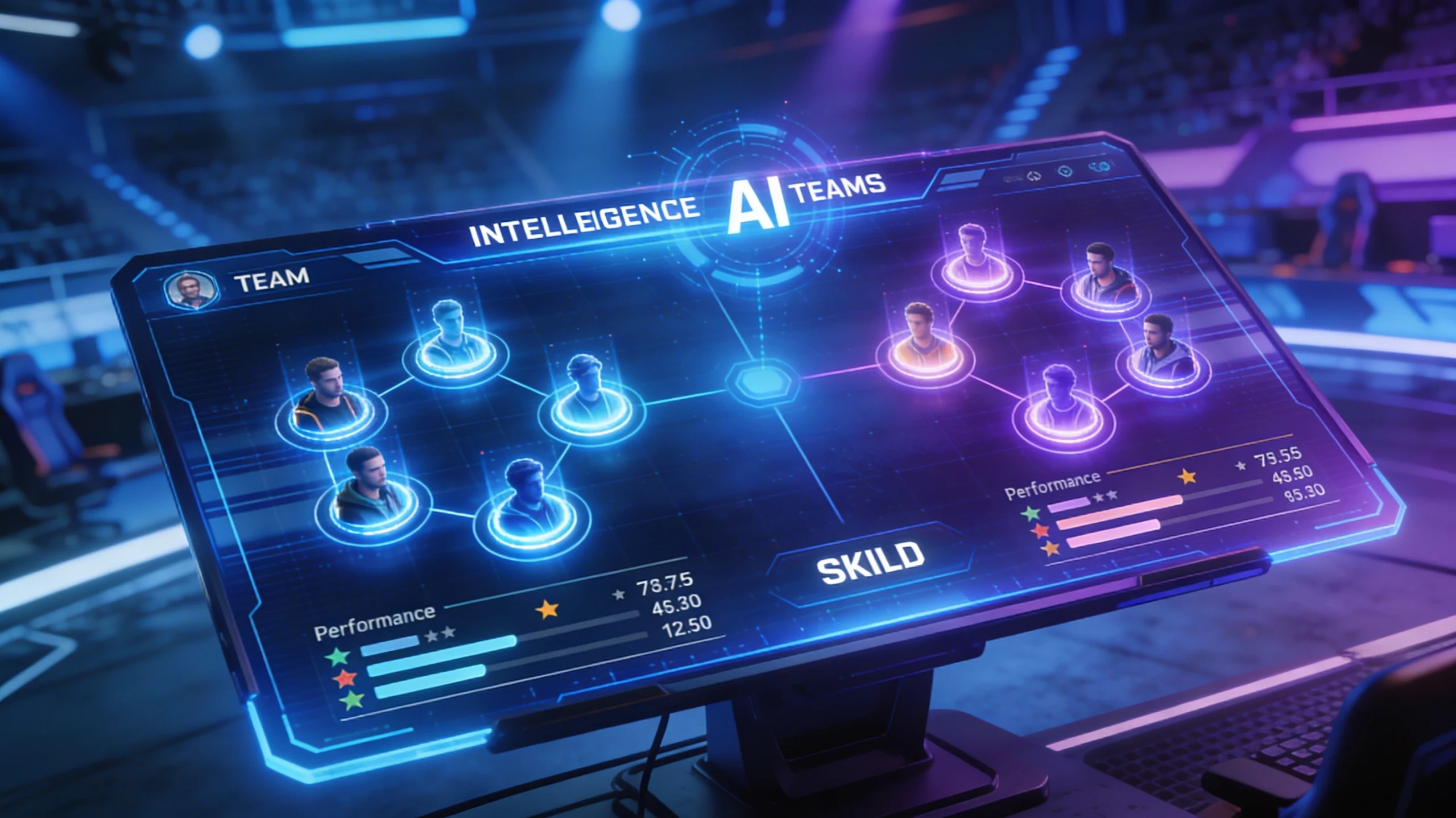
You’ve probably experienced this scenario countless times. The match starts, and within minutes, your team is getting steamrolled. The scoreboard tells an ugly story three of your teammates are clearly outmatched while the opposing squad seems stacked with veterans. You’re not imagining things. Team balancing has failed you, and it happens far more often than it should.
After covering competitive gaming systems for years and speaking with developers who build these systems, I’ve come to appreciate how deceptively difficult team balancing actually is. It’s not just about splitting players evenly. It’s about predicting how five strangers will perform together against five other strangers. That’s where machine learning enters the picture, attempting to solve puzzles that basic algorithms simply cannot handle.
The Problem With Traditional Balancing
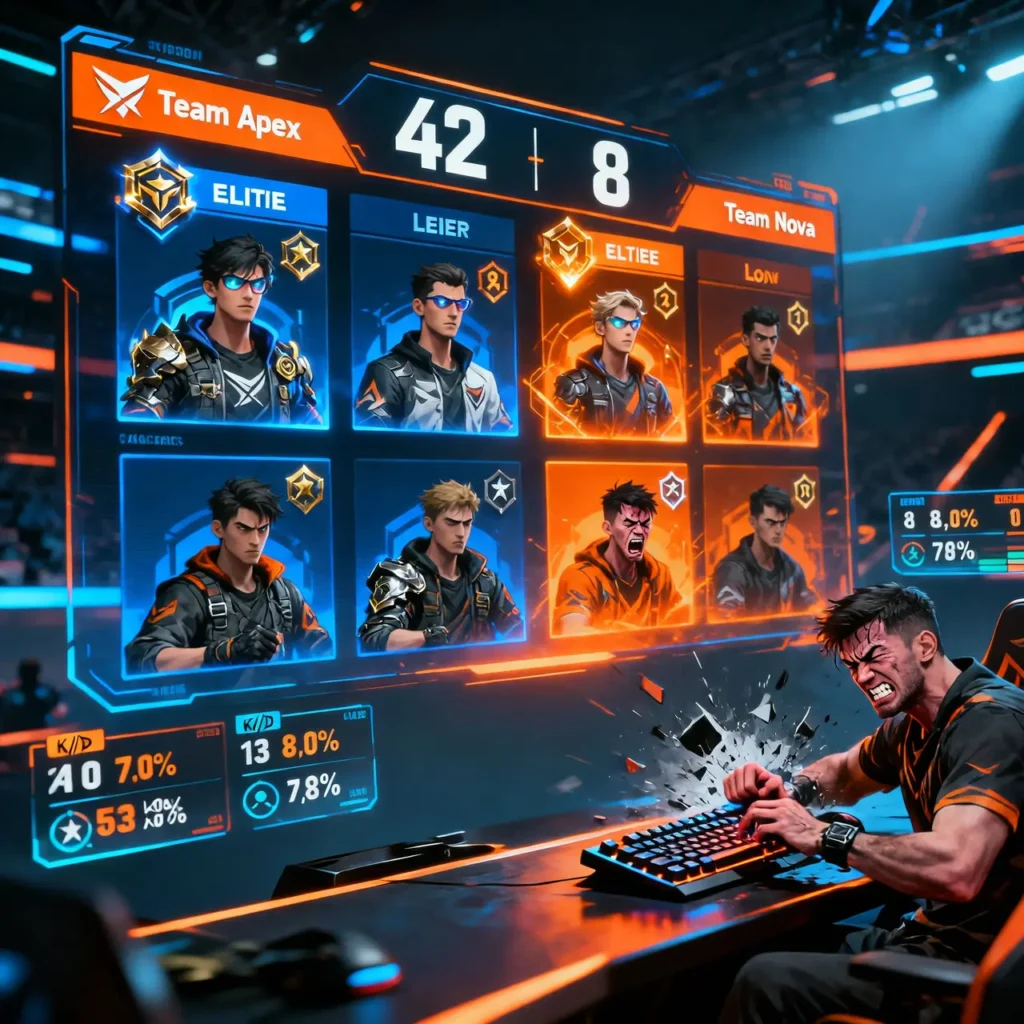
Old school team balancing operated on simple math. Calculate average skill ratings for potential team configurations. Pick the arrangement where both sides have similar averages. Done.
Except it never really worked. A team with one exceptional player and four beginners might average identically to a team of five intermediate players. On paper, balanced. In practice, a disaster. The exceptional player dominates but can’t carry hard enough. The beginners feed kills. Everyone leaves frustrated.
Map selection compounds the problem. Some players excel on certain maps while struggling on others. Traditional systems treated all performance as equivalent regardless of context.
Then there’s the role problem. Team based games require different functions tanks, healers, damage dealers, support characters. Stacking one team with aggressive fraggers while the other gets support-focused players creates imbalance that pure skill ratings miss entirely.
How Machine Learning Changes the Equation
Modern balancing systems don’t just look at overall skill numbers. They analyze patterns, tendencies, and contextual performance data that would overwhelm manual analysis.
Consider what these systems actually track. Your performance on specific maps. Your win rate with particular character types. How you perform when queued with friends versus strangers. Your effectiveness during early match phases compared to late game scenarios. Whether your recent sessions show improvement, decline, or consistency.
Overwatch 2 provides a fascinating case study. Blizzard’s balancing considers role preferences, hero pools, and historical performance across different team compositions. The system recognizes that a Mercy main and a Widowmaker main require different teammates to succeed, even if their overall ratings look similar.
Rainbow Six Siege takes contextual analysis further. The game tracks operator selections, map-specific statistics, and even attacking versus defending performance separately. A player might be a monster on defense but struggle during attacks. Intelligent balancing accounts for this asymmetry.
The Chemistry Factor
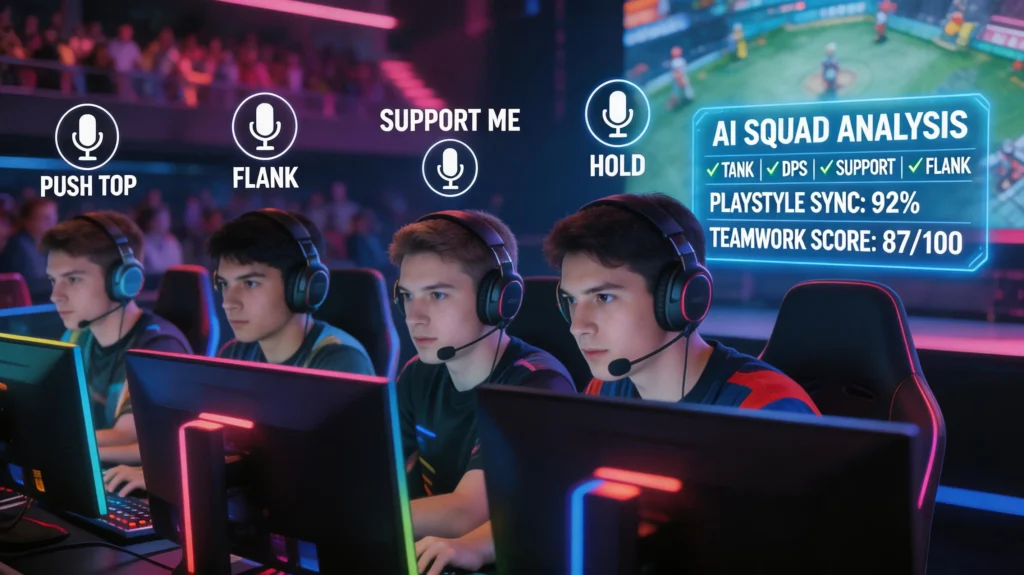
Here’s something that genuinely surprised me when I first learned about it. Advanced balancing systems attempt to predict team chemistry how well random players will actually cooperate.
Communication patterns factor into this analysis. Some games monitor voice chat usage, ping frequency, and callout behavior. Players who actively communicate get flagged differently than silent teammates. Mixing communicators thoughtfully can improve team cohesion.
Playstyle compatibility matters too. Aggressive players sometimes clash with methodical teammates. Certain personality types synergize better than others. While this sounds almost like astrology, the data apparently supports these distinctions in aggregate.
Valorant’s system reportedly considers agent selection history when forming teams. If you typically lock in aggressive duelists, the algorithm might pair you with support oriented players who complement that style. Whether this consistently works remains debatable, but the approach shows sophistication beyond simple number matching.
Real World Implementation Challenges
Theory sounds great. Reality proves messier.
Queue times represent the eternal tradeoff. Perfect team balancing requires large player pools and patience. Matchmaking systems face constant pressure to find matches quickly. Waiting twelve minutes for ideal balance tests player tolerance. Most will accept imperfect games to avoid extended waits.
Smurfs and account manipulation wreck prediction models. A brand new account controlled by a professional-level player defeats any skill estimation. Systems require several games to calibrate accurately, and those calibration matches create terrible experiences for everyone involved.
Party queues introduce complications. How do you balance when one team includes a premade group of five friends with established coordination? The communication advantage alone skews expectations. Some games apply party penalties, artificially inflating group ratings to compensate. Others restrict party sizes in competitive modes.
Regional population differences affect everything. Peak hours in major markets provide abundant players for sophisticated balancing. Off peak queues in smaller regions force compromises. A perfectly balanced match becomes impossible when only thirty players are searching simultaneously.
Transparency Versus Secrecy
Gaming companies historically kept balancing algorithms secret. The reasoning made sense expose the system and players exploit it. But opacity breeds distrust. Players assume the worst when they can’t see how decisions get made.
Rocket League earned community respect through relative transparency. Psyonix explained their MMR system, clarified how party balancing works, and addressed common misconceptions directly. Players still complain about matchmaking, but informed complaints differ qualitatively from paranoid accusations.
League of Legends moved toward transparency as well. Riot publishes explanations of their balancing philosophy, acknowledges limitations openly, and solicits feedback through official channels. This approach builds trust even when results disappoint.
Companies guarding algorithms too zealously often face backlash. Apex Legends weathered accusations of rigged matchmaking partly because Respawn revealed little about their engagement optimization. Whether the accusations held merit mattered less than the perception of hidden manipulation.
Ethical Questions Worth Asking
Player data collection for balancing raises legitimate privacy considerations. How much behavioral tracking is acceptable? Where’s the line between improving match quality and surveillance capitalism?
Engagement-optimized balancing troubles many players. If systems prioritize player retention over competitive integrity, are matches truly fair or just addictively calibrated? The distinction matters ethically even if results look similar superficially.
Accessibility concerns deserve attention too. Players with disabilities may show performance patterns that algorithms misinterpret. Thoughtful systems should account for diverse player populations without disadvantaging anyone.
What’s Next for Team Balancing
The frontier involves predictive modeling that anticipates performance before matches start. Rather than balancing based on historical averages, future systems may predict how specific combinations of players will perform on the selected map with their likely character picks.
Cross-platform balancing will require continued refinement. Console, PC, and mobile players demonstrate different performance characteristics. Mixing these populations fairly demands sophisticated adjustment.
The ultimate goal remains simple even as methods grow complex: create matches where both teams have genuine chances to win, where individual contributions feel meaningful, and where everyone leaves feeling the experience was fair. We’re closer than ever, but perfection remains elusive. That’s okay. Progress beats perfection, and today’s matches feel considerably more balanced than gaming’s early online era.
Frequently Asked Questions
What is AI based team balancing?
It uses machine learning to analyze player data and create balanced teams by considering factors beyond simple skill ratings.
How does it differ from traditional balancing?
Traditional systems use average skill ratings. AI systems analyze contextual performance, playstyles, communication patterns, and predicted team chemistry.
Which games use AI team balancing?
Major titles including Overwatch 2, Valorant, League of Legends, Rainbow Six Siege, and Apex Legends employ sophisticated balancing systems.
Why do matches still feel unbalanced sometimes?
Queue time pressures, smurfing, party groups, and limited player pools force compromises in match quality.
Does AI balancing affect my individual rank?
Indirectly. Better balanced matches theoretically provide more accurate skill assessment over time.
Can team balancing be manipulated?
Intentional performance throwing or smurf accounts can disrupt balancing, though systems increasingly detect such behavior.