
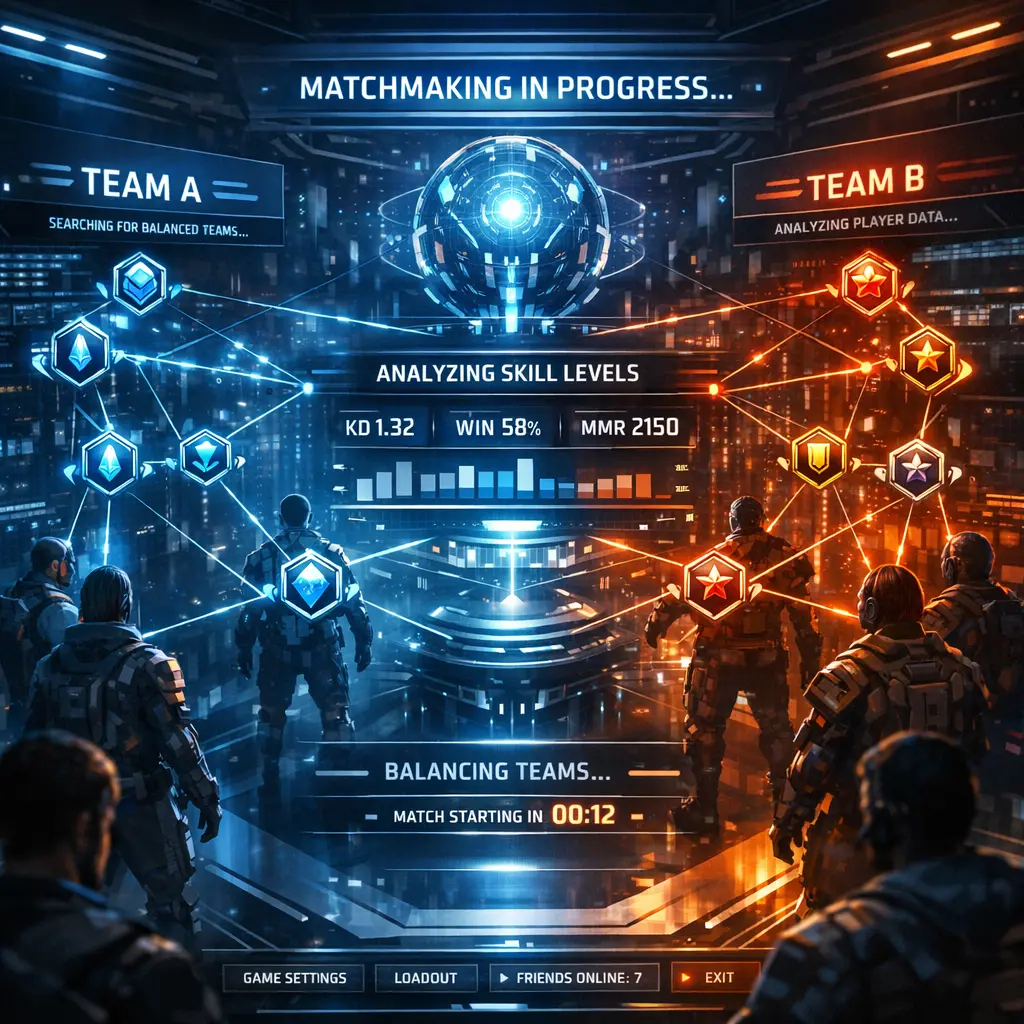
There’s a moment every gamer recognizes. You queue up for a match, wait through the countdown, and within seconds you’re either facing opponents who demolish you effortlessly or you’re the one doing the demolishing. Neither feels particularly satisfying. Getting matchmaking right is one of gaming’s trickiest challenges, and the algorithms working behind the scenes have become incredibly sophisticated in their attempts to solve it.
I’ve spent years analyzing competitive gaming systems, and what strikes me most is how players rarely think about matchmaking until it fails them. When it works, matches feel natural challenging but winnable. When it doesn’t, nothing else about the game matters.
What Matchmaking Actually Measures
The simplest matchmaking approach pairs players randomly. Early online games did exactly this, and chaos reigned. A complete beginner might face a professional-level player, creating miserable experiences for everyone involved.
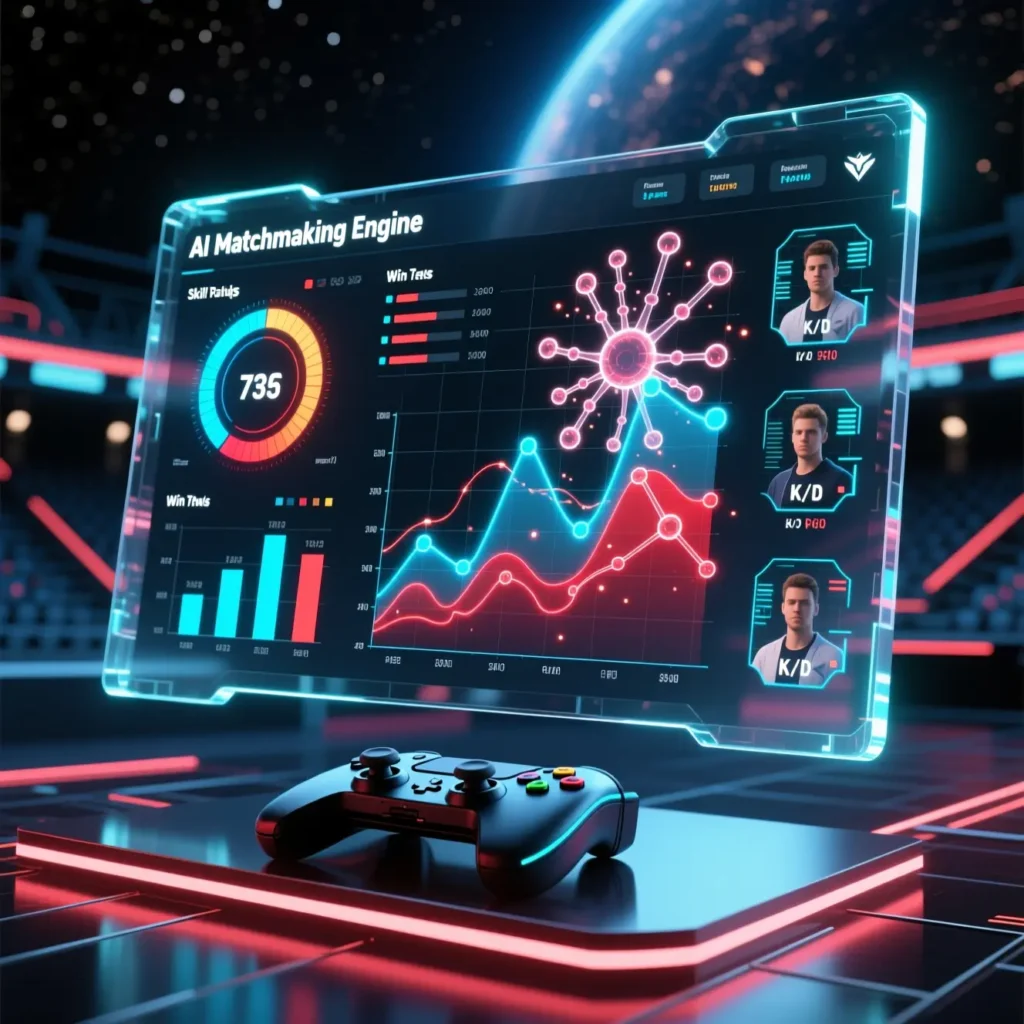
Modern systems measure far more than basic skill level. They track your recent performance trends, your win rate, your consistency, and even factors you might never consider like how you perform during certain hours or on specific maps.
The foundational concept most people know is Elo rating, borrowed from chess. You have a number representing your skill. Beat someone rated higher? Your number climbs faster. Lose to someone lower? It drops more steeply. Simple enough in theory.
But gaming introduced complications chess never faced. What happens in team based games? How do you evaluate individual contribution when outcomes depend on five strangers working together? Microsoft’s TrueSkill system, developed for Xbox Live, tackled this by tracking both your estimated skill AND the uncertainty around that estimate. New players carry high uncertainty, meaning their ratings shift dramatically with each result. Established veterans have stable ratings that move gradually.
Riot Games pushed further with League of Legends, separating visible rank from hidden matchmaking rating. Your displayed tier shows progression and feels rewarding. The hidden number actually determines who you play against. This distinction lets developers optimize both competitive integrity and psychological satisfaction different goals requiring different approaches.
The Skill Based Matchmaking Controversy
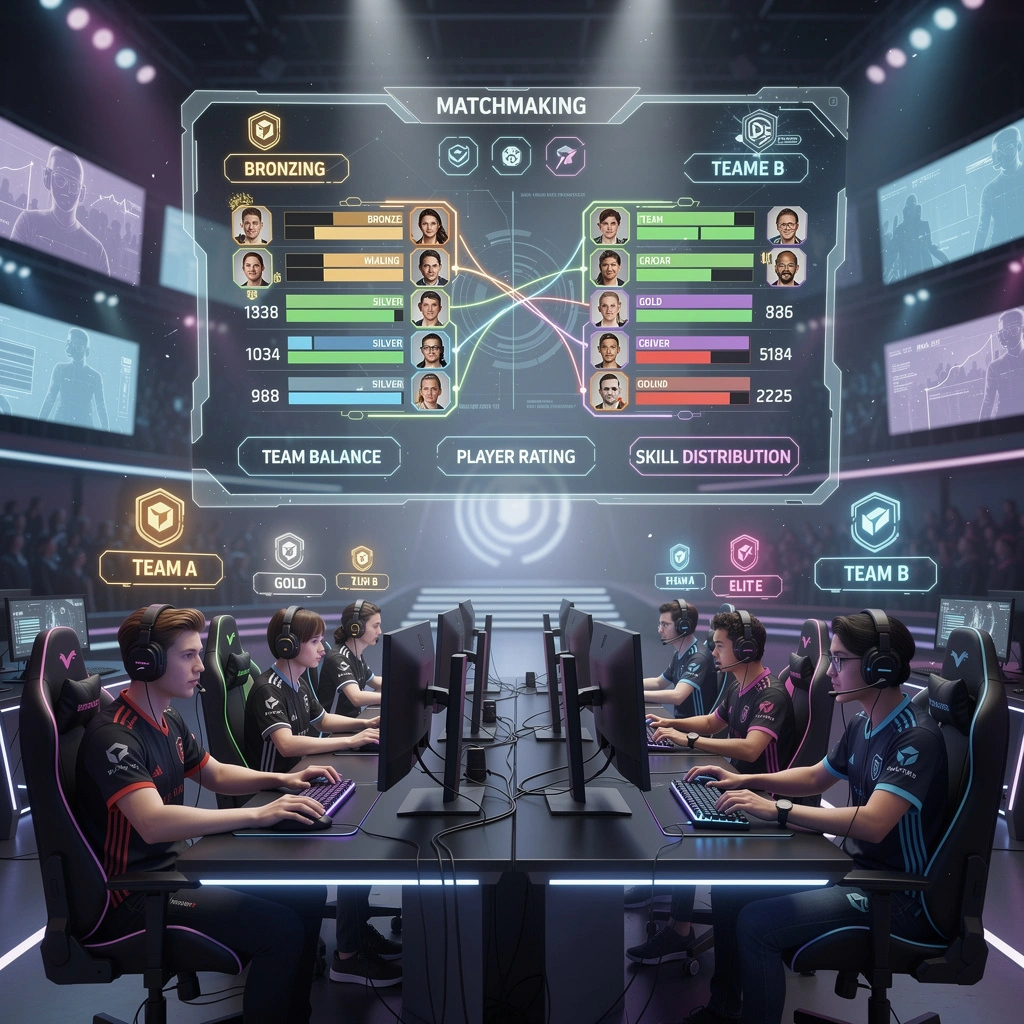
Nothing divides gaming communities quite like skill-based matchmaking debates. Call of Duty players especially have argued about this for years, and honestly, both sides have legitimate points.
The anti-SBMM crowd argues that strict skill matching makes every game feel like a sweaty tournament. There’s no relaxation. You can’t experiment with new weapons or strategies because optimal play becomes mandatory for survival. Some players genuinely miss the variety of older matchmaking where any skill level might appear in your lobby.
Supporters counter that the alternative means frequent slaughters in both directions. New players face discouragement so severe they quit entirely. Without SBMM, the player base skews toward hardcore veterans willing to endure punishment until they “get good.”
Fortnite found middle ground with their approach. The game uses aggressive skill-based matching but adds AI bots to fill lobbies at lower skill tiers. New players face mostly bots, gradually encountering more humans as skills develop. It’s a clever solution that maintains full lobbies while protecting beginners, though purists criticize the artificial population.
Beyond Skill: The Factors You Don’t See
Connection quality influences matchmaking more than players realize. The best skill match means nothing if latency destroys the experience. Geographic proximity matters. Internet connection quality matters. Peak hours versus off peak changes everything.
Algorithms balance queue times against match quality constantly. Waiting fifteen minutes for a perfect match frustrates players just as surely as mismatched games do. Developers set tolerance thresholds—how long before the system widens its search parameters? Too aggressive and quality suffers. Too conservative and nobody plays.
Player behavior factors into modern systems as well. Xbox’s reputation system influences matchmaking, pairing problematic players together. Riot monitors toxicity and adjusts accordingly. The reasoning makes sense: why punish well-behaved players by consistently placing disruptive teammates alongside them?
Some games track playstyle preferences. Do you favor aggressive rushing or methodical tactics? Some matchmaking systems attempt grouping compatible approaches, reducing team friction before matches even start.
The Engagement Optimization Question
Here’s where things get ethically murky. Gaming companies optimize for retention and monetization alongside competitive fairness. These goals sometimes conflict.
Patents from major publishers reveal systems designed to manipulate match outcomes for engagement purposes. One Activision patent described adjusting matchmaking to expose players to opponents using premium items, theoretically encouraging purchases. Whether such systems see actual implementation remains unclear, but their existence in patent filings raises legitimate concerns.
The “win lose win” pattern appears suspiciously consistent across multiple games. Players report streaks that feel algorithmically influenced a series of easy wins followed by crushing losses, then recovery. Developers deny intentional manipulation, but the conspiracy theories persist because the feeling is so widespread.
Epic Games faced lawsuits alleging Fortnite’s matchmaking deliberately creates addictive patterns. The outcome remains undetermined, but the scrutiny suggests regulators are paying attention to these systems.
Practical Realities for Players
Understanding matchmaking helps manage expectations. Your first games in any ranked system carry enormous weight that initial calibration period determines your baseline. Playing seriously during placement matches genuinely matters.
Smurfing creating new accounts to face weaker opponents exploits matchmaking limitations. Companies fight this through phone verification, hardware identification, and rapid skill detection that accelerates experienced players out of beginner brackets. The battle continues endlessly.
Queue times tell you something about player population and your skill level. Exceptionally long waits typically mean either off peak hours or skill levels that require wider searches. Sometimes the answer is simply waiting until more players are active.
Where Matchmaking Is Heading
Rocket League’s system represents current best practices transparent MMR, separate ratings for different modes, and reasonable tolerance for party size disparities. Their approach proves that sophisticated matchmaking and player trust can coexist.
Future systems will likely incorporate more behavioral prediction, anticipating how specific player combinations will interact. The goal isn’t just skill balance but experience optimization—creating matches that feel satisfying regardless of outcome.
Cross-platform play adds complexity, requiring calibration between mouse/keyboard and controller players. Some games apply input-based separation; others let mixed lobbies form with adjusted expectations.
The perfect matchmaking algorithm probably doesn’t exist. Too many variables, too many competing priorities, too many players with conflicting definitions of “fun.” But the science keeps advancing, and today’s matches feel dramatically better than gaming’s early online days. That’s progress worth acknowledging, even while pushing for continued improvement.
Frequently Asked Questions
What is MMR in gaming?
Matchmaking Rating is a hidden number representing your skill level, used to pair you with similarly skilled opponents.
Why does skill-based matchmaking feel so controversial?
It creates consistently challenging matches, which some players find exhausting compared to variable difficulty in older systems.
Do matchmaking algorithms affect who wins?
They determine opponents, not outcomes. However, some players suspect engagement-focused manipulation, though evidence remains inconclusive.
How long should I expect matchmaking to take?
Typically under two minutes for popular games during peak hours. Longer waits indicate either off-peak times or unusual skill levels.
Can playing in parties affect my matchmaking experience?
Yes. Most systems adjust expectations for premade groups, often matching them against slightly stronger opponents to compensate for coordination advantages.
Does connection quality impact matchmaking?
Absolutely. Modern systems prioritize low-latency connections alongside skill matching to ensure playable experiences.