


I’ve spent over a decade working in network infrastructure, and honestly, few things frustrate users more than unexpected lag. Whether you’re in a heated gaming session, on an important video call, or executing a high frequency trade, that split second delay can cost you dearly. What’s exciting is how artificial intelligence is fundamentally changing our approach to this age old problem.
Understanding the Lag Problem
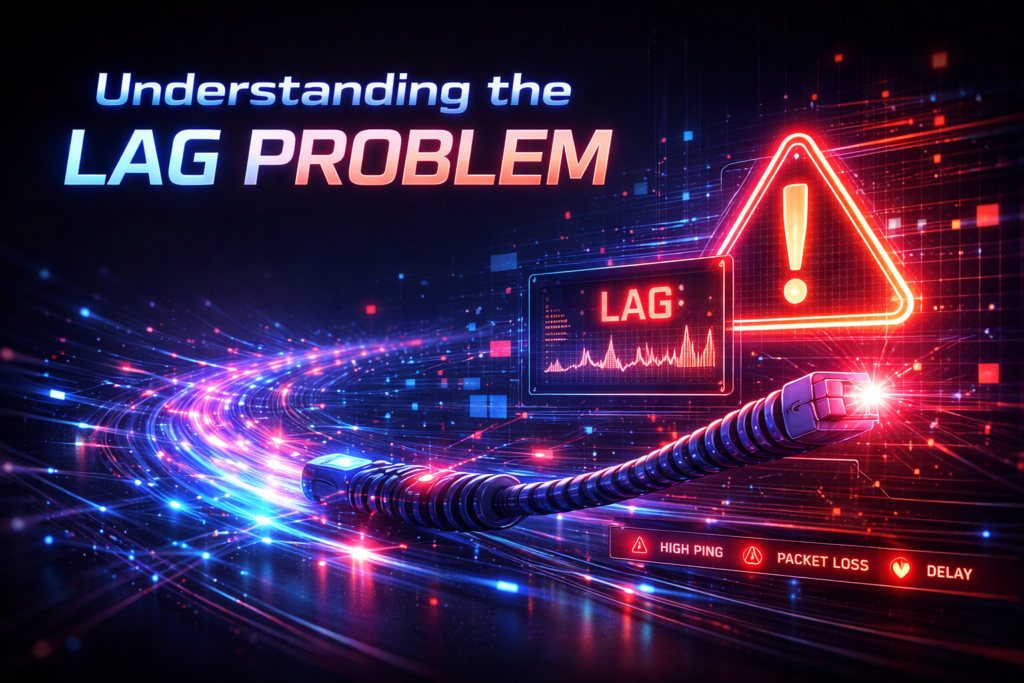
Lag technically known as latency isn’t going away anytime soon. It’s an inherent characteristic of networked systems. Data packets travel through cables, bounce between servers, and navigate complex routing paths before reaching their destination. Traditional approaches to managing lag have been reactive. Something slows down, monitoring tools detect it, and engineers scramble to fix the issue.
But here’s where things get interesting. Reactive solutions aren’t cutting it anymore. In today’s real time applications, by the time you’ve detected lag, the damage is already done. Your customer has abandoned the shopping cart. Your gamer has rage quit. Your trader has missed the window.
How AI Based Lag Prediction Actually Work
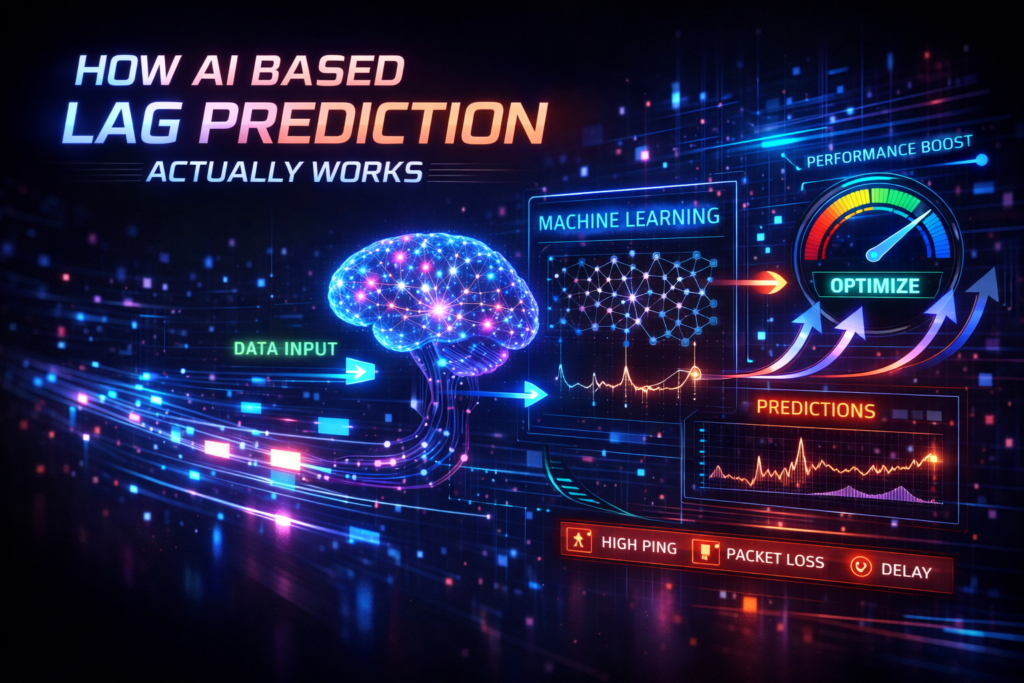
The concept sounds straightforward, but the execution is surprisingly sophisticated. AI based lag prediction systems analyze historical network data, identify patterns, and forecast when latency spikes are likely to occur before they happen.
These systems typically ingest massive amounts of data: packet loss rates, bandwidth utilization, server load metrics, geographic routing information, and even external factors like time of day or special events. Machine learning models, particularly recurrent neural networks and long short term memory networks, excel at finding temporal patterns in this data.
I worked with a gaming company last year that implemented predictive latency management. Their system monitored around 400 different network parameters in real time. The machine learning model learned that certain combinations say, increased packet loss on a specific routing path combined with elevated server CPU usage preceded major lag events about 73% of the time. That might not sound perfect, but it’s enormously valuable.
When the system predicts imminent lag, it can take proactive action: rerouting traffic, preloading content, adjusting video quality before buffering occurs, or warning users to delay critical actions.
Real World Applications Making a Difference
The gaming industry has embraced this technology enthusiastically. Companies like Riot Games and Epic Games invest heavily in predictive network optimization. Their systems can anticipate connection quality and adjust matchmaking accordingly, pairing players with similar predicted latency to ensure fair gameplay.
Streaming platforms represent another major use case. Netflix and similar services use predictive algorithms to determine optimal streaming quality. Rather than waiting for buffering to occur, their systems anticipate bandwidth constraints and preemptively adjust quality often so seamlessly that viewers never notice.
Cloud computing providers have perhaps the strongest financial incentive for lag prediction. Amazon Web Services and Microsoft Azure utilize predictive models to optimize workload distribution across data centers. By anticipating traffic patterns and potential bottlenecks, they can maintain service level agreements and prevent costly outages.
Financial trading platforms represent the most latency sensitive application imaginable. In high frequency trading, microseconds translate directly to money. Predictive systems help traders anticipate network conditions and time their transactions for optimal execution.
The Technical Challenges Nobody Talks About
Look, I’m enthusiastic about this technology, but it’s not magic. Several significant challenges remain.
First, there’s the data quality problem. Prediction models are only as good as their training data. Networks evolve constantly new hardware gets deployed, routing configurations change, traffic patterns shift. Models trained on historical data can become outdated surprisingly quickly.
Second, false positives create their own issues. If your system constantly predicts lag that doesn’t materialize, it might unnecessarily degrade video quality or reroute traffic suboptimally. Finding the right sensitivity threshold requires careful tuning.
Third, edge cases remain problematic. Major events think a popular game launch or a viral video create traffic patterns that models have never encountered. These black swan events often overwhelm predictive systems precisely when they’re needed most.
Privacy considerations also deserve mention. Effective lag prediction requires collecting detailed user behavior data. Companies must balance prediction accuracy against data minimization principles and regulatory requirements like GDPR.
What the Future Looks Like
The trajectory here is genuinely exciting. We’re seeing convergence between network layer prediction and application layer optimization. Future systems won’t just predict lag they’ll automatically implement mitigation strategies tailored to specific applications and user contexts.
Edge computing is accelerating these capabilities. By moving prediction algorithms closer to users, response times improve dramatically. I’ve seen prototypes that predict latency spikes and implement countermeasures within milliseconds.
The integration with 5G networks opens additional possibilities. Network slicing allows carriers to create dedicated virtual networks for latency sensitive applications. AI-based prediction helps determine optimal slice configurations dynamically.
Federated learning approaches are addressing the privacy challenge. Rather than centralizing user data, models can train locally on devices and share only anonymized insights. This maintains prediction quality while respecting privacy boundaries.
Practical Takeaways
For businesses considering AI based lag prediction, start with clear objectives. What specific latency problems are you trying to solve? What’s the cost of lag in your context? This helps determine appropriate investment levels.
Work with vendors who understand your industry’s specific requirements. Generic solutions often underperform compared to purpose built systems. Gaming latency prediction differs fundamentally from financial trading requirements.
Plan for ongoing maintenance. These systems require continuous monitoring and periodic retraining. Budget for operational overhead, not just initial deployment.
Frequently Asked Questions
What is AI based lag prediction?
It’s technology that uses machine learning to forecast network latency issues before they occur, enabling proactive rather than reactive management.
How accurate are lag prediction systems?
Accuracy varies by implementation, but well tuned systems typically achieve 70-85% prediction accuracy for significant latency events.
Which industries benefit most from lag prediction?
Gaming, video streaming, cloud computing, financial trading, and telemedicine see the strongest returns on investment.
Does lag prediction eliminate latency completely?
No, it helps minimize and mitigate latency but cannot eliminate it entirely. Physical distance and network infrastructure impose fundamental limits.
How much data is required for effective prediction?
Most systems need several weeks to months of historical data for initial training, plus continuous data feeds for ongoing refinement.
Is AI-based lag prediction expensive to implement?
Costs range widely from relatively affordable cloud based solutions to multi million dollar enterprise deployments, depending on scale and customization requirements.