
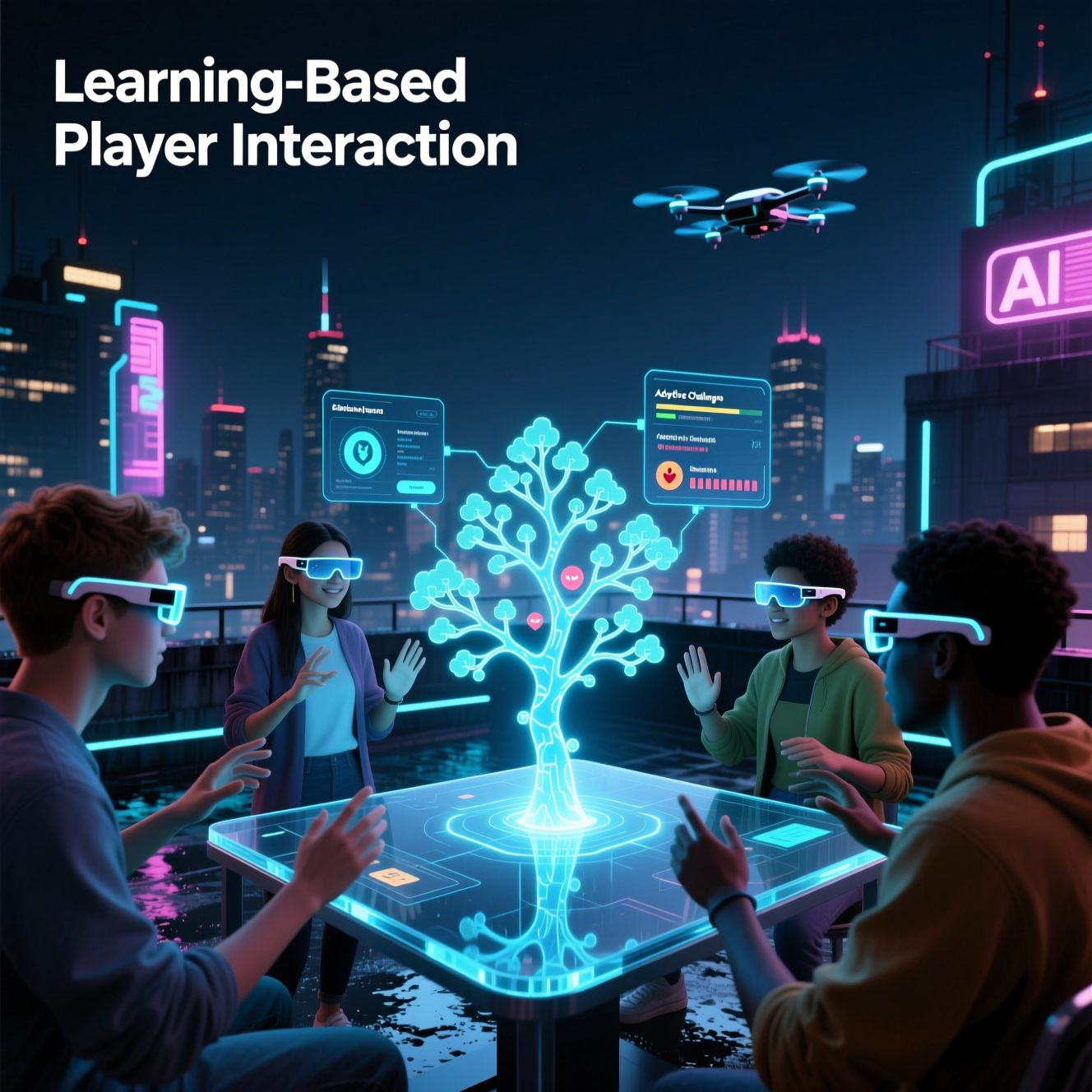
I still remember the exact moment when a game genuinely surprised me. Playing through a title I’d been testing, my companion character referenced a habit I hadn’t consciously noticed my tendency to explore every corner before advancing. The dialogue wasn’t scripted for that behavior. The system had learned it.
That experience fundamentally shifted how I think about player interaction design. Static, predetermined responses feel increasingly outdated. The future belongs to systems that observe, learn, and genuinely adapt to individual players.
What Learning Based Interaction Actually Means
Traditional game interactions follow predetermined scripts. You press a button, something happens. You make a choice, the game responds with pre-written consequences. The experience is identical for every player who makes identical decisions.
Learning-based interaction breaks this mold. These systems observe player behavior over time, identify patterns and preferences, then adjust interactions accordingly. The game becomes a responsive partner rather than a fixed experience.
This goes beyond simple difficulty adjustment. We’re talking about NPC behaviors that evolve, dialogue systems that recognize your communication style, and game worlds that reshape themselves around your demonstrated interests.
The underlying technology combines behavioral analytics with machine learning models trained to recognize meaningful patterns. Every action you take feeds data into systems designed to understand not just what you did, but why you might have done it and what you’ll likely want next.
How Games Actually Learn From Players
Let me walk through the mechanics because understanding the process matters.
First comes observation. Modern games track enormous amounts of player data movement patterns, decision timing, resource usage, exploration tendencies, combat approaches, even pause behaviors. This creates a behavioral fingerprint unique to each player.
Next comes pattern recognition. Machine learning algorithms identify recurring behaviors that indicate preferences, skill levels, and play styles. A player who consistently chooses diplomatic options over combat gets categorized differently than someone who shoots first and asks questions never.
Then comes prediction and response. Based on recognized patterns, the system anticipates player expectations and adjusts interactions proactively. If you’ve shown interest in lore, characters offer more backstory. If you rush through dialogue, conversations become more concise.
The cycle continues indefinitely. Player reactions to adaptations feed back into the system, refining its understanding. The game literally gets better at reading you the longer you play.
Real Examples That Actually Work
Middle-earth: Shadow of Mordor introduced the Nemesis System, which remains one of the most impressive implementations of learning-based interaction. Orc captains remember previous encounters with you. One who defeated you might mock that victory later. Another who fled might show fear when you reappear. The system learns relationship history and generates contextually appropriate interactions.
Left 4 Dead’s AI Director represents another landmark approach. Rather than learning about individual players, it learns about group dynamics. How fast is the team moving? Are they sticking together or spreading out? What’s their current stress level based on health and ammunition? The system adjusts enemy spawns, item placement, and pacing based on real-time learning about group behavior.
Façade, despite being nearly two decades old, pioneered learning-based dialogue interaction. The characters respond to natural language input, learning your conversational approach and adjusting their relationship dynamics accordingly. It was rough around the edges but demonstrated remarkable potential.
More recently, AI Dungeon and similar narrative experiences use machine learning to create responsive storytelling that adapts to player input in ways that feel genuinely improvisational.
Benefits That Transform Engagement
When learning-based interaction works well, several things happen.
Personalization creates ownership. Players feel the experience belongs to them specifically. My playthrough differs meaningfully from yours because the game responded to my particular behaviors. This personal investment drives emotional connection.
Replay value multiplies. Games that adapt to behavior offer genuinely different experiences across playthroughs. Changing your approach produces different adaptations, encouraging experimentation.
Accessibility emerges naturally. Players requiring different interaction styles receive them without explicit accessibility menus. Someone processing information slowly gets patient NPCs. Someone moving quickly gets snappier responses.
Immersion deepens significantly. Characters and worlds that respond intelligently to your specific actions feel alive. The uncanny valley of interaction where responses feel slightly off shrinks as systems learn your expectations.
Challenges I’ve Witnessed Firsthand
Let’s be realistic about difficulties because they’re substantial.
Cold start problems frustrate early interactions. Before the system has enough data to learn meaningful patterns, interactions feel generic or occasionally wrong. First impressions suffer while the learning process catches up.
Overfitting creates awkwardness. Systems that learn too specifically from limited behavior samples produce bizarre adaptations. I’ve seen characters reference player tendencies that were accidental rather than intentional, creating confusion rather than connection.
Transparency versus magic. Players respond differently when they know they’re being learned from versus when adaptations feel mysteriously appropriate. Some appreciate understanding the system; others find explicit acknowledgment breaks immersion. Finding the right balance is genuinely tricky.
Computational requirements limit implementation scope. Real-time learning at meaningful depth requires substantial processing power, creating tension between adaptation sophistication and performance stability.
Data interpretation errors compound over time. If the system misreads early behaviors, subsequent learning builds on flawed foundations. A player experimenting with unfamiliar strategies might get incorrectly categorized, producing persistently inappropriate interactions.
Ethical Dimensions Worth Considering
Learning from player behavior carries responsibility.
Manipulation potential concerns me most. Systems that learn what players respond to can engineer precisely those responses, potentially creating unhealthy engagement loops. The line between personalization and exploitation requires conscious ethical attention.
Privacy implications deserve transparency. Players should understand what behaviors are being tracked and how that information shapes their experience. Hidden observation feels violative even when technically disclosed in unread terms of service.
Consent and control matter. Players should have options to reset learned models, disable adaptation features, or understand what the system believes about them. Agency over your own profile respects player autonomy.
Where This Technology Heads
The trajectory points toward increasingly sophisticated learning systems that feel less like algorithms and more like genuine understanding.
Multi-session learning will become standard, with games recognizing returning players and picking up relationship threads across play sessions. Characters will remember not just what you did, but who you’ve been over months of interaction.
Cross-game player models present fascinating possibilities. Imagine games that learn from your broader gaming history, recognizing your preferences before you demonstrate them in a new title.
Emotional recognition through input patterns offers another frontier. Learning systems that detect frustration, excitement, or boredom from controller handling could adapt interactions to current emotional states.
The ultimate goal remains creating experiences that feel like genuine relationships rather than programmed responses. We’re not there yet. But every year, the gap narrows.
Frequently Asked Questions
What is learning-based player interaction?
It refers to game systems that observe player behavior over time and adapt their responses based on recognized patterns and preferences.
How do games learn player behavior?
Through tracking inputs, decisions, timing, and movement patterns, then using machine learning to identify meaningful behavioral signatures.
Which games use learning-based interaction effectively?
Shadow of Mordor, Left 4 Dead, Façade, and various adaptive narrative games demonstrate strong implementations.
Does learning-based interaction affect privacy?
Yes. These systems require behavioral data collection, raising questions about storage, usage, and player consent.
Can players control what games learn about them?
This varies by game. Better implementations offer options to reset learned models or disable adaptive features entirely.
Does learning-based interaction replace traditional game design?
No. It complements rather than replaces scripted content, adding personalization layers to foundational design.